Buy rent-a-cook.eu ?
We are moving the project
rent-a-cook.eu .
Are you interested in purchasing the domain
rent-a-cook.eu ?
domain@kv-gmbh.de · 0541-91531010
Buy rent-a-cook.eu ?
How do you transform an object clause or a subject clause into a dependent clause (subordinate clause)?
To transform an object clause or a subject clause into a dependent clause, you can add a subordinating conjunction at the beginning of the clause. For example, changing "I know that he is coming" (object clause) to "I know when he is coming" (dependent clause). Another way is to remove the subject or object pronoun and change the verb form to make it dependent on the main clause. For instance, changing "She believes she can win" (subject clause) to "She believes she can win" (dependent clause). **
Is an infinitive clause a subordinate clause?
Yes, an infinitive clause is a type of subordinate clause. It functions as a single unit within a sentence and is dependent on the main clause for its meaning. Infinitive clauses typically begin with the word "to" followed by a verb, and they can serve various purposes such as expressing purpose, result, or obligation. **
Similar search terms for Clause
Top-Angebote
Products related to Clause:
-
Elite Cuisine Elite Gourmet EFPL2510 Rotary GraterThe Elite Gourmet EFPL2510 Rotary Grater is a fast and efficient kitchen tool designed to simplify food prep. With its easy-to-use rotary handle, you can grate, slice, or shred cheese, vegetables, nuts, and more with minimal effort.23,78 $*Shipping: 0,00 $Secure redirect to the provider
-
Uplifted Finds World Cuisine Canvas Art Gourmet Ravioli & Ramen Posters Executive Kitchen & Culinary Sanctuary Decor sku 19 30 X 40 Cm No Frame"Inaugurate a highculture ""EpicureanSanctuary"" energy in your environment with our World Cuisine Canvas Art. This premium gourmet food print collection is the ultimate designer solution for creating a ""GlobalModern"" or ""ExecutiveStudioLuxe""..."50,97 $*Shipping: 0,00 $Secure redirect to the provider
-
Uplifted Finds World Cuisine Canvas Art Gourmet Ravioli & Ramen Posters Executive Kitchen & Culinary Sanctuary Decor sku 18 30 X 40 Cm No Frame"Inaugurate a highculture ""EpicureanSanctuary"" energy in your environment with our World Cuisine Canvas Art. This premium gourmet food print collection is the ultimate designer solution for creating a ""GlobalModern"" or ""ExecutiveStudioLuxe""..."50,97 $*Shipping: 0,00 $Secure redirect to the provider
-
Uplifted Finds World Cuisine Canvas Art Gourmet Ravioli & Ramen Posters Executive Kitchen & Culinary Sanctuary Decor sku 16 20 X 30 Cm No Frame"Inaugurate a highculture ""EpicureanSanctuary"" energy in your environment with our World Cuisine Canvas Art. This premium gourmet food print collection is the ultimate designer solution for creating a ""GlobalModern"" or ""ExecutiveStudioLuxe""..."40,97 $*Shipping: 0,00 $Secure redirect to the provider


-
Can an adverbial clause also be a subject clause or an object clause?
No, an adverbial clause cannot be a subject clause or an object clause. An adverbial clause functions as an adverb to modify a verb, adjective, or adverb in a sentence. Subject clauses and object clauses, on the other hand, serve as the subject or object of the main clause, respectively. Each type of clause has a specific grammatical function within a sentence. **
-
How do I recognize a relative clause, a conjunctional clause, and an interrogative clause?
A relative clause typically starts with a relative pronoun (such as who, whom, whose, which, or that) and provides more information about a noun in the main clause. A conjunctional clause, on the other hand, is introduced by a conjunction (such as and, but, or because) and connects two independent clauses. An interrogative clause is a type of clause that asks a question and is typically introduced by an interrogative pronoun (such as who, what, when, where, why, or how) or an interrogative adverb (such as how, when, or where). **
-
How can I recognize a relative clause, a conjunctional clause, and an interrogative clause?
A relative clause is a type of dependent clause that typically starts with a relative pronoun (such as who, whom, whose, which, or that) and provides additional information about a noun in the main clause. A conjunctional clause, on the other hand, is a dependent clause that functions as an adverb, adjective, or noun in a sentence and is connected to the main clause by a conjunction (such as because, although, if, when, etc.). An interrogative clause is a type of clause that asks a question and typically begins with a question word (such as who, what, where, when, why, or how) or with a helping verb followed by the subject. **
-
Is the accompanying clause in direct speech a main clause or a subordinate clause?
The accompanying clause in direct speech can be either a main clause or a subordinate clause, depending on its role in the sentence. If the clause is expressing a complete thought and can stand alone as a sentence, then it is a main clause. However, if the clause is dependent on the rest of the sentence for its meaning and cannot stand alone, then it is a subordinate clause. It's important to consider the context and structure of the sentence to determine the role of the accompanying clause in direct speech. **


Is there a sentence with a subordinate clause, a main clause, and another subordinate clause?
Yes, here is an example of a sentence with a subordinate clause, a main clause, and another subordinate clause: "While I was studying for my exam, which was scheduled for next week, my friend called to invite me to a movie." In this sentence, "While I was studying for my exam" and "which was scheduled for next week" are the subordinate clauses, while "my friend called to invite me to a movie" is the main clause. **
Is this a main clause and a subordinate clause?
Yes, this is a main clause and a subordinate clause. The main clause is "Is this a main clause and a subordinate clause?" and the subordinate clause is "in 3-5 sentences." The main clause can stand alone as a complete sentence, while the subordinate clause depends on the main clause to give it meaning. **
Top-Angebote
Products related to Clause:
-
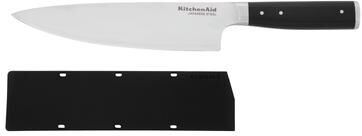
KitchenAid Gourmet Forged Chef Knife, 8-Inch, BlackTake on a variety of everday cutting tasks in the kitchen with this KitchenAid 8-Inch Chef Knife. The high-carbon Japanese steel blade provides a long lasting edge for a professional, quality cut every time.25,83 $*Shipping: 0,00 $Secure redirect to the provider
-
Elite Cuisine Elite Gourmet EFPL2510 Rotary GraterThe Elite Gourmet EFPL2510 Rotary Grater is a fast and efficient kitchen tool designed to simplify food prep. With its easy-to-use rotary handle, you can grate, slice, or shred cheese, vegetables, nuts, and more with minimal effort.23,78 $*Shipping: 0,00 $Secure redirect to the provider
-
Uplifted Finds World Cuisine Canvas Art Gourmet Ravioli & Ramen Posters Executive Kitchen & Culinary Sanctuary Decor sku 19 30 X 40 Cm No Frame"Inaugurate a highculture ""EpicureanSanctuary"" energy in your environment with our World Cuisine Canvas Art. This premium gourmet food print collection is the ultimate designer solution for creating a ""GlobalModern"" or ""ExecutiveStudioLuxe""..."50,97 $*Shipping: 0,00 $Secure redirect to the provider
-
How do you transform an object clause or a subject clause into a dependent clause (subordinate clause)?
To transform an object clause or a subject clause into a dependent clause, you can add a subordinating conjunction at the beginning of the clause. For example, changing "I know that he is coming" (object clause) to "I know when he is coming" (dependent clause). Another way is to remove the subject or object pronoun and change the verb form to make it dependent on the main clause. For instance, changing "She believes she can win" (subject clause) to "She believes she can win" (dependent clause). **
-
Is an infinitive clause a subordinate clause?
Yes, an infinitive clause is a type of subordinate clause. It functions as a single unit within a sentence and is dependent on the main clause for its meaning. Infinitive clauses typically begin with the word "to" followed by a verb, and they can serve various purposes such as expressing purpose, result, or obligation. **
-
Can an adverbial clause also be a subject clause or an object clause?
No, an adverbial clause cannot be a subject clause or an object clause. An adverbial clause functions as an adverb to modify a verb, adjective, or adverb in a sentence. Subject clauses and object clauses, on the other hand, serve as the subject or object of the main clause, respectively. Each type of clause has a specific grammatical function within a sentence. **
-
How do I recognize a relative clause, a conjunctional clause, and an interrogative clause?
A relative clause typically starts with a relative pronoun (such as who, whom, whose, which, or that) and provides more information about a noun in the main clause. A conjunctional clause, on the other hand, is introduced by a conjunction (such as and, but, or because) and connects two independent clauses. An interrogative clause is a type of clause that asks a question and is typically introduced by an interrogative pronoun (such as who, what, when, where, why, or how) or an interrogative adverb (such as how, when, or where). **
Similar search terms for Clause
-
Uplifted Finds World Cuisine Canvas Art Gourmet Ravioli & Ramen Posters Executive Kitchen & Culinary Sanctuary Decor sku 18 30 X 40 Cm No Frame"Inaugurate a highculture ""EpicureanSanctuary"" energy in your environment with our World Cuisine Canvas Art. This premium gourmet food print collection is the ultimate designer solution for creating a ""GlobalModern"" or ""ExecutiveStudioLuxe""..."50,97 $*Shipping: 0,00 $Secure redirect to the provider
-
Uplifted Finds World Cuisine Canvas Art Gourmet Ravioli & Ramen Posters Executive Kitchen & Culinary Sanctuary Decor sku 16 20 X 30 Cm No Frame"Inaugurate a highculture ""EpicureanSanctuary"" energy in your environment with our World Cuisine Canvas Art. This premium gourmet food print collection is the ultimate designer solution for creating a ""GlobalModern"" or ""ExecutiveStudioLuxe""..."40,97 $*Shipping: 0,00 $Secure redirect to the provider
-
Uplifted Finds World Cuisine Canvas Art Gourmet Ravioli & Ramen Posters Executive Kitchen & Culinary Sanctuary Decor sku 1 30 X 40 Cm No Frame"Inaugurate a highculture ""EpicureanSanctuary"" energy in your environment with our World Cuisine Canvas Art. This premium gourmet food print collection is the ultimate designer solution for creating a ""GlobalModern"" or ""ExecutiveStudioLuxe""..."50,97 $*Shipping: 0,00 $Secure redirect to the provider
-
Uplifted Finds World Cuisine Canvas Art Gourmet Ravioli & Ramen Posters Executive Kitchen & Culinary Sanctuary Decor sku 9 30 X 40 Cm No Frame"Inaugurate a highculture ""EpicureanSanctuary"" energy in your environment with our World Cuisine Canvas Art. This premium gourmet food print collection is the ultimate designer solution for creating a ""GlobalModern"" or ""ExecutiveStudioLuxe""..."50,97 $*Shipping: 0,00 $Secure redirect to the provider
-
How can I recognize a relative clause, a conjunctional clause, and an interrogative clause?
A relative clause is a type of dependent clause that typically starts with a relative pronoun (such as who, whom, whose, which, or that) and provides additional information about a noun in the main clause. A conjunctional clause, on the other hand, is a dependent clause that functions as an adverb, adjective, or noun in a sentence and is connected to the main clause by a conjunction (such as because, although, if, when, etc.). An interrogative clause is a type of clause that asks a question and typically begins with a question word (such as who, what, where, when, why, or how) or with a helping verb followed by the subject. **
-
Is the accompanying clause in direct speech a main clause or a subordinate clause?
The accompanying clause in direct speech can be either a main clause or a subordinate clause, depending on its role in the sentence. If the clause is expressing a complete thought and can stand alone as a sentence, then it is a main clause. However, if the clause is dependent on the rest of the sentence for its meaning and cannot stand alone, then it is a subordinate clause. It's important to consider the context and structure of the sentence to determine the role of the accompanying clause in direct speech. **
-
Is there a sentence with a subordinate clause, a main clause, and another subordinate clause?
Yes, here is an example of a sentence with a subordinate clause, a main clause, and another subordinate clause: "While I was studying for my exam, which was scheduled for next week, my friend called to invite me to a movie." In this sentence, "While I was studying for my exam" and "which was scheduled for next week" are the subordinate clauses, while "my friend called to invite me to a movie" is the main clause. **
-
Is this a main clause and a subordinate clause?
Yes, this is a main clause and a subordinate clause. The main clause is "Is this a main clause and a subordinate clause?" and the subordinate clause is "in 3-5 sentences." The main clause can stand alone as a complete sentence, while the subordinate clause depends on the main clause to give it meaning. **
* All prices are inclusive of VAT and, if applicable, plus shipping costs. The offer information is based on the details provided by the respective shop and is updated through automated processes. Real-time updates do not occur, so deviations can occur in individual cases. ** Note: Parts of this content were created by AI.